TL;DR: Expect a sequence, not a scramble. Booking an NYC food photographer usually raises one specific worry: what happens on the day. A short brief and crew conversation happens first, architecture and hero dishes get shot before the kitchen gets busy, service moments come once the room is live, and a dated, organized set of files lands within the week.
What to Expect From an NYC Food Photographer
Most people booking a food photographer in NYC have already decided photography matters. What they want before signing off is simpler: a walkthrough of the day itself, so nothing on set catches them off guard.
That walkthrough runs in order. What gets aligned before the crew shows up, how a Manhattan production day moves, what changes when the shoot happens inside a live restaurant instead of a controlled space, who is standing in the room and why, and what shows up in the inbox once it is over.
Before the Shoot: What Gets Aligned in Advance
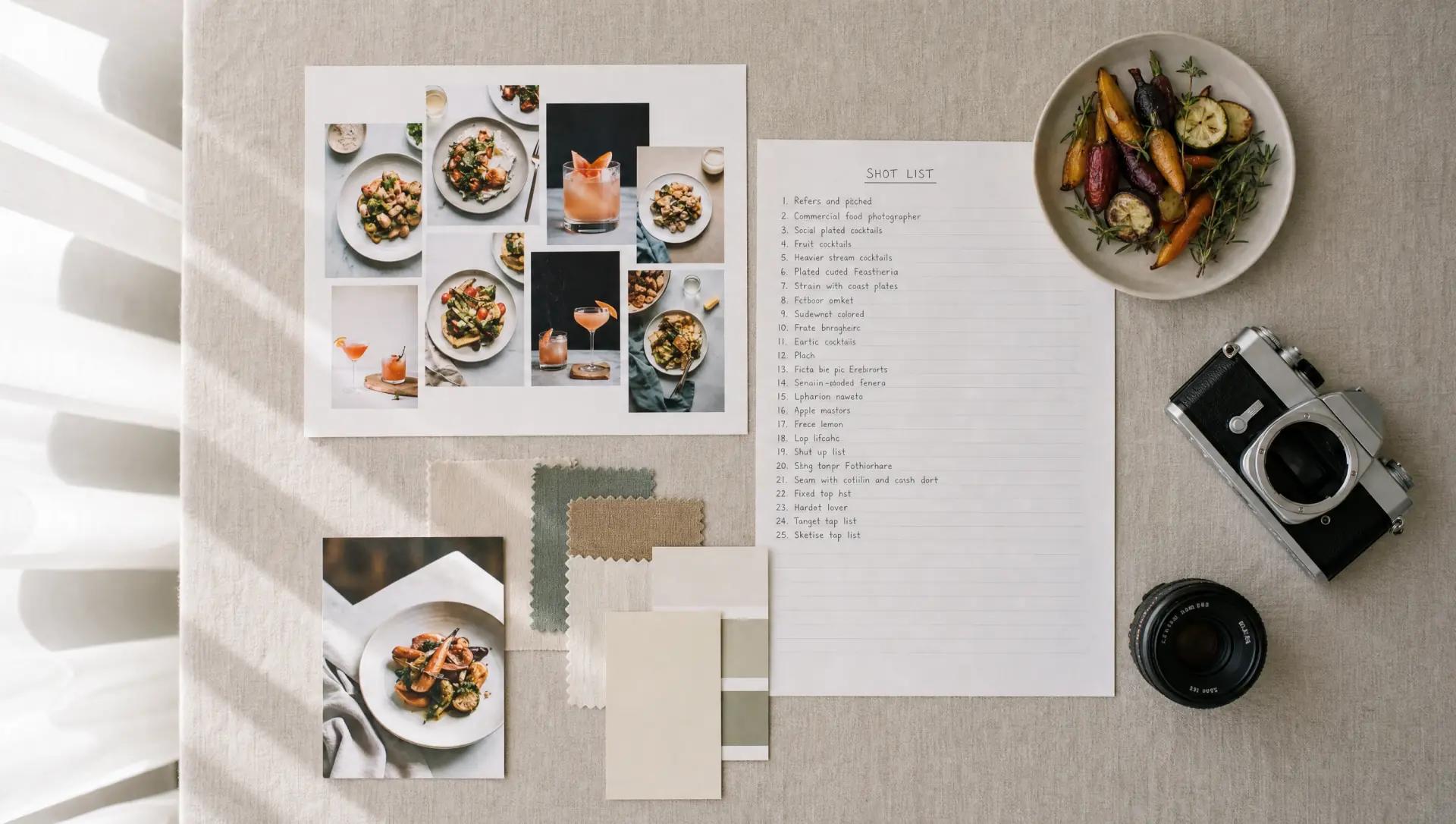
The brief sets the tone for everything after it. A clear brief, with real reference images and an honest sense of what the space and kitchen can deliver, means less back and forth once the crew arrives. A vague one is not a warning sign on its own, it usually means more questions get asked up front instead of on set.
Planning also decides what gets shot and why. Every asset falls into one of three buckets: hero images that carry the campaign, supporting shots that widen the story, plated details, environmental frames, portraits, and anything held back for later use if the client wants a larger asset library built from the same day. Deciding this in advance is what keeps the shot list realistic instead of improvised.
Crew size follows the brief. A trusted group of specialists, chosen for the specific job rather than a single generalist, is the default. The client's part is usually the space, the food or product itself, and one person on site who can approve selects as the day moves.

Inside a Manhattan Production Day
New York tends to move with sharper commercial speed and more direct pressure than some other markets. There is an expectation that people solve problems quickly, make decisions fast, and keep momentum high through the day. That pace shapes the whole production, from the first call through how a shoot runs on set.
Working across both New York and London makes the contrast visible. London can be just as demanding, but often with more sensitivity to nuance, framing, and how the work supports a brand over time. Bringing some of each into a shoot, New York's speed and London's refinement, is part of what makes a Manhattan day run well.
Location logistics add one more Manhattan-specific wrinkle. A handheld camera on a public sidewalk, in a park, or on a bridge walkway does not need a city permit, as long as the crew is not bringing an equipment package, asking for parking, or claiming exclusive use of the space, per the NYC Mayor's Office of Media and Entertainment. Most restaurant and hospitality shoots happen inside a private space and never touch this rule, but it is one more piece of production knowledge that comes from working the city regularly rather than flying a crew in for a single day.
Shooting on Location During Live Restaurant Service
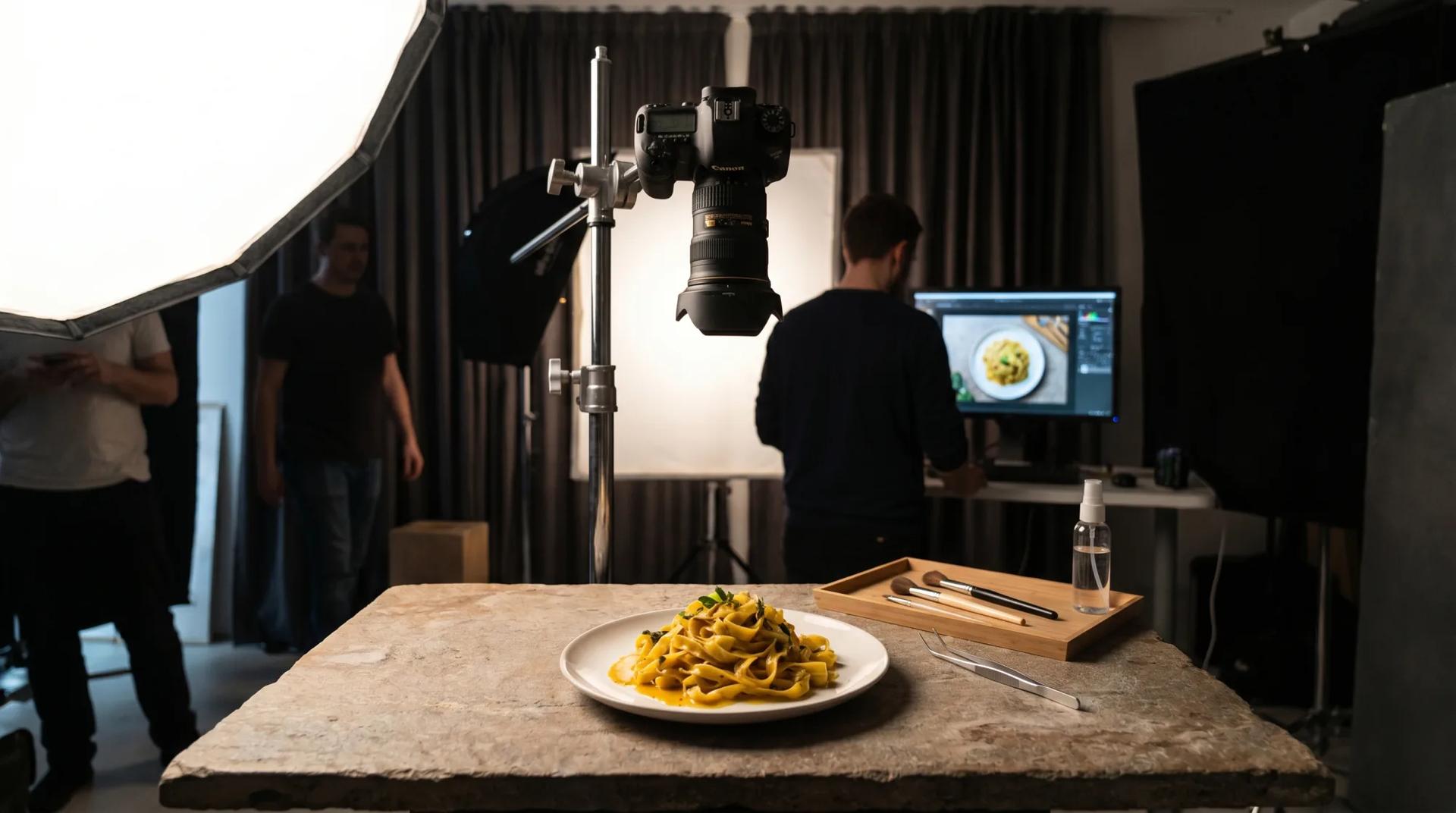
Sequencing a hospitality shoot comes down to the kitchen's rhythm, not a fixed shot list order. Architecture goes first, since it does not depend on the kitchen's timing. Hero dishes get shot at the lull points in prep and service, when the kitchen can focus and plate properly instead of rushing a dish for the camera. Portraits can slide in anywhere the day allows, and service moments, real guests in a live room, get captured once the restaurant is running.
A kitchen at full service cannot always plate a dish to its most polished version. There is no time to make it perfect while orders are moving, especially in a mid-range restaurant not used to polishing every plate for a camera. The finalized hero shots happen outside of service time for that reason. What gets captured during service is different: lived-in, lifestyle moments that show the brand with real guests in the room, so the kitchen's pace and the quality of the hero images both stay protected.
That sequence held on a brand refresh done for restaurant photography clients that included a Michelin-starred spot in Midtown East and a bistro near Wall Street. Hero beauty stills of dishes and cocktails came first, shot with full studio control and no human element in frame. Portraits and any talent work followed, before kitchen prep began. Once service started, the setup switched to a lighter handheld rig using flash or available light only, working from a private dining room or a corner table that stayed out of the flow. Any shot involving an occupied table started with asking the guests directly, explaining it was for the website or social, and confirming they were comfortable being included. The resulting library now runs across menus, the website, social media, and press coverage the restaurant has pitched using the same photography credits.

Who Is in the Room
On a typical day, three or four people run the set: the photographer directing exposure and composition, a food or prop stylist keeping plates camera-ready, a role the chef or a member of the kitchen staff often fills, and an assistant running lights and keeping the set organized, with the client's point person nearby to approve selects. A producer is a separate role, worth adding when the day involves talent or enough moving parts that someone has to hold the schedule. Advertising builds can add a lighting technician or motion specialist for a bigger rig. Restaurant days on location usually pare down to only what the room can hold without crowding a guest table.
Restaurant days and advertising days ask different things of that crew. A restaurant day covering a full menu, portraits, and environmental shots can mean 30 dishes in a single day. An advertising day producing five to eight, maybe 10, fully finished hero images can take just as long, because the constraint is control, not volume. What a shoot like this costs tracks the same logic: more control and more finishing per image, not more images, is what drives the budget.
What Arrives After the Shoot
Delivery starts with a conversation. If a client already has a preferred file structure, the studio follows it. If not, the default system dates everything to the shoot, then files it into folders by asset, with every size output for that asset living in the same folder. File names lead with a reverse date, year, month, day, so a brand team can find the right file a year later by knowing roughly when the shoot happened. Turnaround stays flexible rather than fixed, and normally runs 36 hours to four days depending on the size of the set and how much retouching the selects need.
One thing most clients forget to ask for is web-sized formatting. A studio can produce a smaller, properly compressed version built for a website far more cleanly than a client compressing a full-resolution file themselves, and it keeps a bloated image off the client's own site. Asking for it up front, before the shoot wraps, is a small addition to the brief that saves a real headache later.
Start Planning Your Shoot
None of this replaces an actual conversation about the specific space, kitchen, and shot list a project needs. The pattern above is the shape most Manhattan food photography days follow, not a rigid script.
The fastest way to get specific answers is to book a call and walk through the space, the timeline, and what the day needs to produce.
Frequently Asked Questions
How long does a food photography shoot take in Manhattan?
It depends on what the day produces, not only the venue. A restaurant day covering a full menu, portraits, and environmental shots can mean 30 dishes in a single day. An advertising day producing five to eight, maybe 10, finished hero images can take as long, because the day is built around control and finishing rather than volume.
What does the studio provide, and what does the client need to have ready?
The studio brings the photographer, lighting, direction, and, when the job calls for it, a trusted crew, stylist, or specialist. The client's side is usually simpler: the space, the food or product itself, and one person on site who can approve selects as the day moves. A clear brief in advance, with real reference images, cuts down on decisions that otherwise have to happen live on set.
Do you shoot on location in the restaurant, or in a studio?
Most restaurant work happens on location, sequenced around the kitchen's actual rhythm rather than a fixed order: architecture first, hero dishes at the prep lull, service moments once the room is live and guests are asked directly. Studio days follow a different, more controlled structure and are more common for advertising work, where the goal is a small number of fully finished hero images rather than full menu coverage.
What happens after the shoot, and how soon does it show up?
Files get dated to the shoot, organized into folders by asset, and named with a reverse date so a brand team can search by when the shoot happened. Turnaround is flexible rather than fixed and normally runs 36 hours to four days, depending on the size of the set and the retouching the selects need. Most clients do not think to ask for web-sized formatting up front, even though it is one of the easiest things to build into delivery, and it keeps oversized images off the client's own site.