TL;DR: A global production workflow does not always have to be about flying a crew to every city. It is a system you design before the shoot so the work stays consistent across markets, time zones, and teams. The model that makes it accessible is hybrid production: you shoot strong source assets once, under human direction, then extend them per market with background changes, seasonal variations, motion, and new formats. That is how one shoot becomes a campaign that runs in New York and London at the same time, without losing the brand along the way.
Cross market production used to mean one thing: more shoots. A campaign that needed to run in New York and London meant two productions, two crews, two budgets, and a quiet hope that the two would match. They rarely did.
That math has changed, and the pressure behind the change is real. Adobe surveyed nearly 3,000 marketers and found that close to two-thirds expect demand for content to grow fivefold between 2024 and 2026, a volume no single shoot, in any one city, was ever built to supply (Adobe, 2024). The hard part of going global was never the camera. It was holding one visual language together while the work scaled across cities and channels. With hybrid production, a single well planned shoot can feed multiple markets, which makes global reach far more accessible than it used to be. The catch is that this only works if the system is built before the shoot, not patched together after it.
What Makes a Global Production Workflow Different From a Local Shoot?
A local shoot can survive improvisation. A global one cannot. The difference is how much structure you build up front.
For a local New York production, there is more room for speed and flexibility. We can solve problems on the day and keep momentum high. For a campaign split across New York and London, I build much harder systems up front: more documentation, more shot logic, more continuity planning, and more attention to surfaces, props, styling, naming conventions, and the handoff between teams and time zones.
The reason is simple. When everyone is in one room, alignment happens in conversation. When the work spans two markets and two crews, alignment has to live in the system, because nobody can lean over and ask. Every decision you do not write down becomes a decision someone improvises later, and improvisation across markets is exactly how a brand starts to drift.
Start With Alignment, Not Gear
Before I think about cameras or crew, I want to understand the system the imagery has to support. The first step is always alignment: clarity on the campaign goal, the intended usage, who is approving the work, and what needs to stay consistent across every output.
That last point is the one that matters most for global work. You have to decide, on purpose and early, what stays fixed and what is allowed to move. Light and color treatment, styling rules, framing logic, and tone usually stay fixed. Specific dishes, locations, and seasonal touches can move by market. When that line is clear from the start, two crews on two continents can make different images that still feel like one brand.
This is why a strong brief matters even more on a global project. If you want a deeper look at how to set that foundation, I wrote a full guide on how to brief a food photographer. The short version: the clearer the brief, the less the work depends on everyone being in the same room.
Plan Assets in Three Buckets: Hero, Support, and Extension
Asset planning starts with one question: are we making a small number of final images, or are we building a source library that becomes a much larger content system? For global work, it is almost always the second. I plan in three buckets.
Hero assets are the anchors. The most controlled, most polished images that carry the campaign visually across every market.
Supporting assets widen the story. Process shots, plated imagery, detail frames, top down table stories, environmental images, portrait moments, and alternate crops and orientations.
Extension assets are where global production gets efficient. If the goal is for one shoot to feed many markets over time, we shoot differently from the start. More angles, more clean source material, more coverage of products and plates, and more environment captured at different hours so it can be expanded intelligently later.
That third bucket is the bridge. It is what turns a single shoot day into raw material for an entire cross market rollout, and it is where AI extension does its real work.
How AI Extension Makes Going Global Accessible
Here is the shift that changes the budget and the logistics. The old model fed every market with its own shoot. The hybrid model feeds many markets from one strong source shoot, extended per market under human direction.
In practice, that means a single hero plate can become the New York winter menu and the London summer terrace. A still can become a short motion loop for paid social. A horizontal hero can become a square placement and a vertical reel. None of that requires flying a crew to a second city. We covered the source properly, so the extensions hold up.
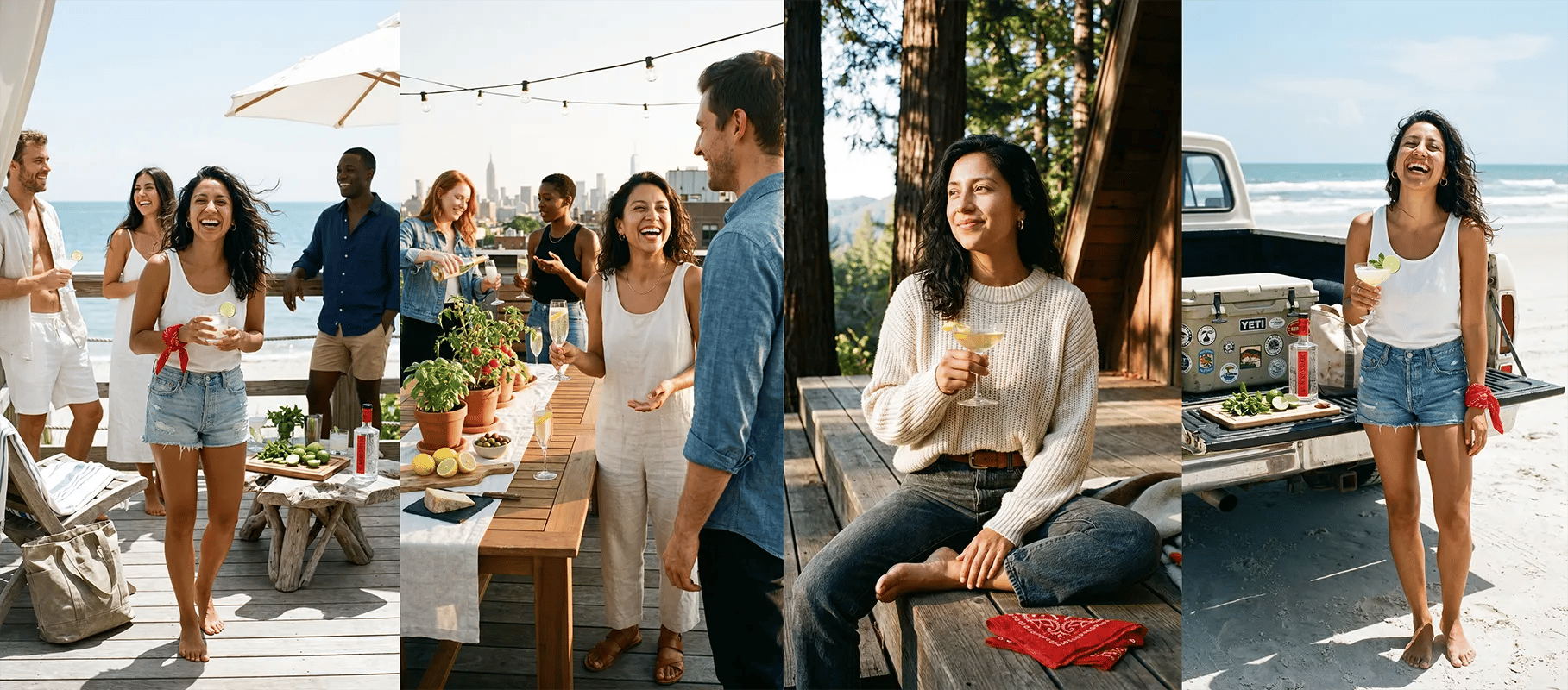
The reason this works is that the extension is always rooted in something real. AI is strongest when it extends what is already grounded: a photographed object, a lighting direction, a surface, or a visual system we have already established. It stays under human direction and creative judgment the whole way. The moment a tool replaces judgment instead of extending it is the moment the work stops being believable, and I have written more about where that line sits in the ethics of AI in food photography.
So the accessibility is real, but it is not free. It is earned at the shoot, by capturing source material clean enough and complete enough to extend with confidence.
Build One Visual Language Across Every Market
Extension only works if there is one visual language to extend. AI scales a language. It does not invent one. If the source and the system are inconsistent, you are just multiplying the inconsistency faster.
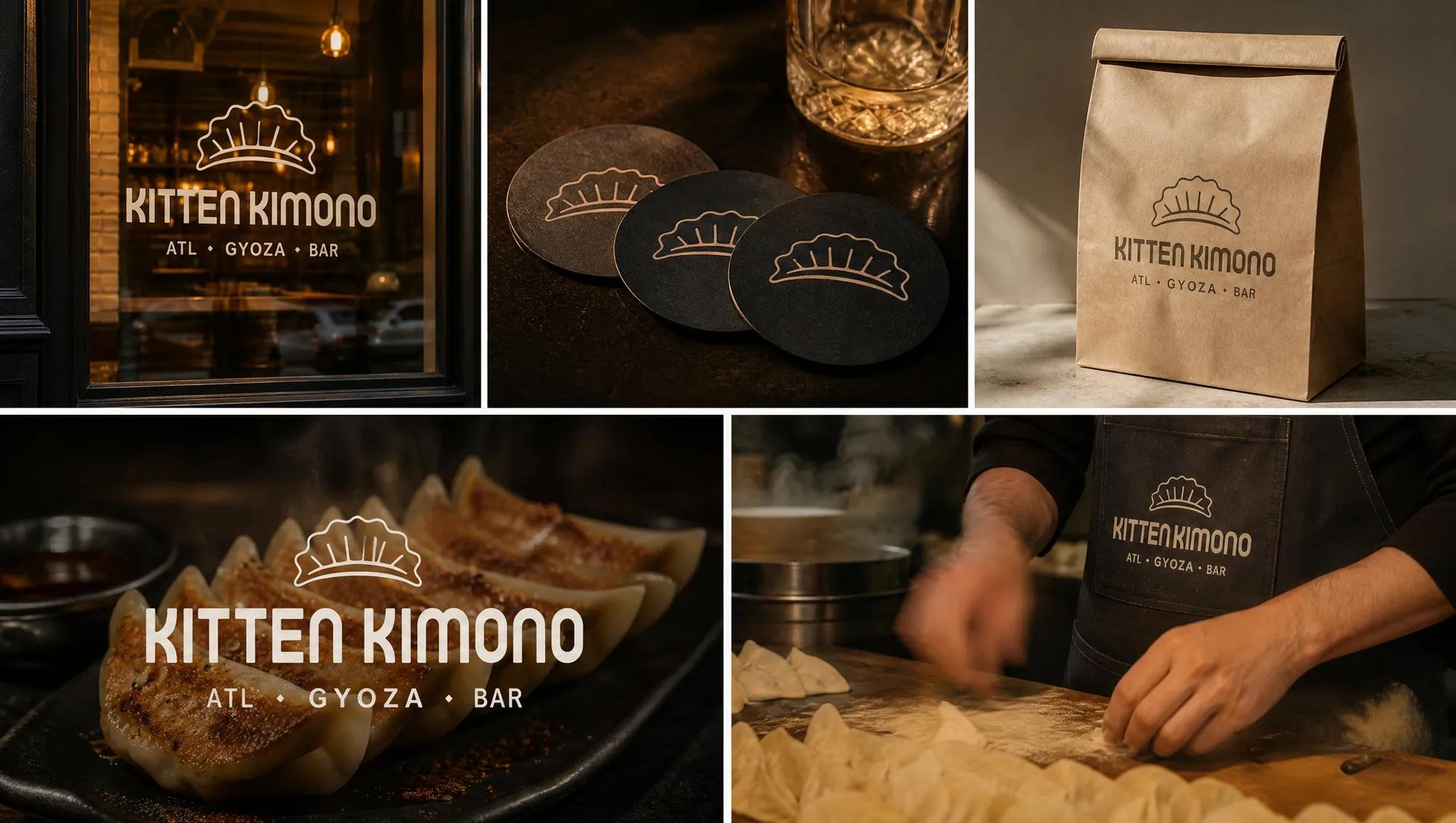
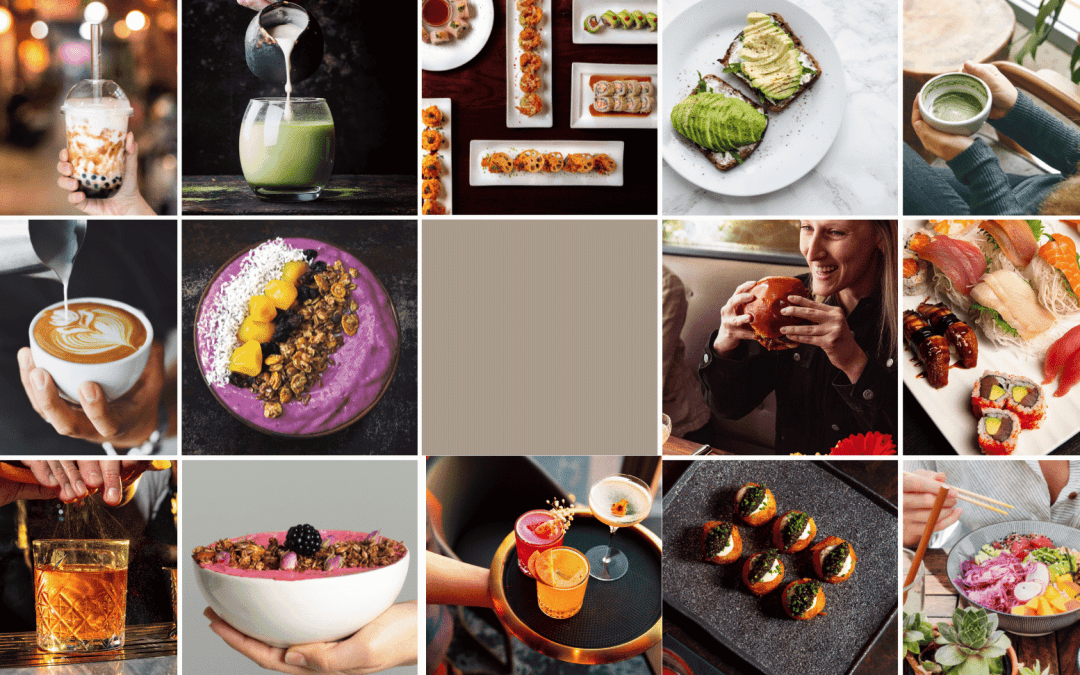
A good example is commercial food photography we produced across multiple sites for a single brand. We wanted the imagery to feel natural, clean, and consistent across all the locations, which meant the overall approach had to create one unified visual language. Within that, each dish still needed enough shape and control to deliver real appetite appeal. The system stayed unified while the specifics moved.
New York and London also bring different production cultures, and the difference is an asset, not a problem. New York tends to move with sharper commercial speed and more direct pressure to decide fast and keep momentum high. London can be just as demanding, with more sensitivity to nuance, refinement, and how the work supports the broader brand over time. Bringing New York speed into London and London refinement into New York tends to strengthen the result rather than dilute it. The job of the workflow is to let both happen without the brand pulling apart, which is really a question of creative direction holding steady across markets. For the underlying model of treating visuals as a system, see building a unified brand identity.
The Handoff and Automation Layer
The least glamorous part of a global workflow is the part that makes it work: naming conventions, documentation, and continuity planning, so a team in one time zone can pick up where another left off and produce matching output. When files, versions, and shot logic are named and tracked consistently, the handoff between markets stops being a guessing game.
Variation at scale belongs to this layer too. Once a campaign is producing dozens of versions across formats and markets, doing it asset by asset becomes the bottleneck. Treating variation and repurposing as a system, through creative automations, is what keeps velocity high without quality slipping. The point is not volume for its own sake. It is consistent, on brand output that arrives fast enough to matter.
Frequently Asked Questions
What is a global production workflow?
It is the system a team designs before a multi market shoot so the work stays consistent across cities, time zones, and crews. It covers alignment on goals and usage, decisions about what stays fixed and what can move, an asset plan built for reuse, naming and handoff conventions, and a plan for extending source assets per market. The workflow is the structure that lets one campaign run in several places at once without drifting.
How does AI make cross market production more accessible?
It changes the model from one shoot per market to one strong source shoot extended per market. Instead of flying a crew to every city, you capture clean, complete source material once and extend it with background changes, seasonal variations, motion, and new formats, all under human direction. That lowers the cost and logistics of reaching multiple markets while a single visual language holds the work together.
Does hybrid production replace the photography shoot?
No. The shoot is the foundation that makes everything else possible. Hybrid production extends real, photographed source material rather than replacing it. The extensions only hold up because the source was captured properly, with enough angles, coverage, and control to expand later. Human creative judgment stays in charge the whole way.
How do you keep a brand consistent across different markets?
By deciding up front what stays fixed and what is allowed to move, then building that into the system. Light, color treatment, styling rules, and framing logic stay fixed. Specific dishes, locations, and seasonal details can change by market. Consistent naming, documentation, and a shared visual language let different crews produce different images that still read as one brand.
You Are Paying for the System
When a brand hires for a global campaign, they are not paying for someone to show up with a camera in each city. They are paying for planning, production strategy, creative judgment, crew coordination, technical control, and a source library that stays useful long after the shoot is over.
That is what a global production workflow really is. A system that captures the right source once, extends it intelligently per market, and holds one visual language across all of it. Done well, going global stops feeling like a logistical risk and starts feeling like leverage.
If you are planning a campaign that needs to run across more than one market, book a call and we can map the source shoot, the extension plan, and the system that keeps it all consistent.